Navigating the Boundary: Balancing Privacy and Openness Within Family Life
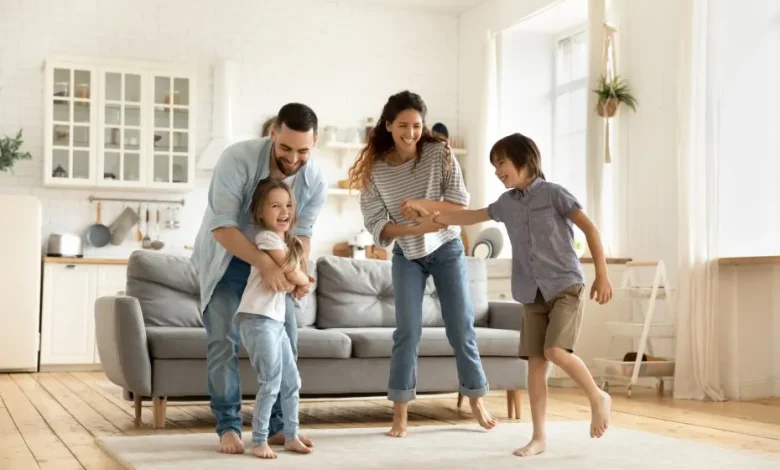
The modern family home is no longer just a physical sanctuary; it is a digital hub, a workspace, and a social network all rolled into one. In this interconnected era, the age-old struggle between individual privacy and familial openness has taken on unprecedented complexity. While open communication fosters trust and emotional intimacy, personal privacy nurtures individuality, autonomy, and self-esteem.
Striking the right balance is not about drawing battle lines between parents and children. Instead, it requires a dynamic, evolving strategy that respects the personal boundaries of each family member while maintaining a strong foundation of collective transparency. When families successfully navigate this terrain, they create an environment where everyone feels both secure in their independence and deeply connected to the whole.
The Evolutionary Need for Privacy in Childhood and Adolescence
Privacy is not a modern luxury; it is a fundamental psychological necessity for human development. As children grow, their relationship with privacy shifts from a simple desire for a closed bedroom door to a complex need for emotional and digital boundaries.
Toddlers to Pre-Teens: Building the Foundation
For young children, privacy is primarily physical. It begins with basic modesty and learning that certain parts of their lives, like using the bathroom or getting dressed, belong to them alone. During the pre-teen years, this expands into a desire for secret diaries, private conversations with friends, and a strong resistance to parental hovering. Recognizing these early boundaries teaches children that they have ownership over their bodies and minds, which is vital for building self-worth.
The Adolescent Autonomy Shift
During adolescence, the need for privacy intensifies dramatically. This is the stage where teenagers begin the process of individuation—detaching slightly from the family unit to forge their own identities.
-
Internal Processing: Teenagers need space to process complex emotions, romantic interests, and identity questions before sharing them with adults.
-
Peer Relationships: Friendships become a primary source of emotional support, requiring private channels of communication.
-
Trial and Error: Adolescents need room to make minor mistakes and explore new ideas without feeling judged or constantly monitored by parents.
The Digital Frontier: Monitoring vs. Tracking
The rise of smartphones, social media, and location-tracking apps has fundamentally disrupted traditional family boundaries. Parents today face a unique dilemma: how to protect their children from digital dangers without invading their privacy to a degree that destroys trust.
The Illusion of Total Safety
Many parents turn to comprehensive monitoring software to track every text message, search query, and GPS coordinate of their children. While well-intentioned, over-reliance on these tools can backfire. Constant surveillance often drives tech-savvy youth underground, leading them to use hidden apps, secondary devices, or encrypted networks. More importantly, it signals to the child that they are not trusted, which can severely damage the parent-child relationship.
A Tiered Approach to Digital Privacy
Rather than implementing an all-or-nothing surveillance state at home, families can adopt a gradual release of responsibility based on age and maturity.
-
Ages 8 to 12: High supervision is appropriate here. Parents should co-view content, set strict screen time limits, and use parental controls to block explicit material. The focus is on teaching digital citizenship.
-
Ages 13 to 15: Transition from active monitoring to spot-checking. Parents should discuss online safety openly, explaining that random checks are for safety, not spying.
-
Ages 16 and Up: High privacy with high accountability. At this stage, tracking should generally be reserved for physical safety (such as location sharing for emergencies) rather than reading private messages, provided the teenager has demonstrated responsible behavior.
Parental Privacy: The Often Forgotten Half of the Equation
Discussions surrounding family privacy frequently focus entirely on children, but parents require and deserve boundaries as well. A home where parents sacrifice 100% of their privacy for their children is often a home marked by burnout and resentment.
Modeling Boundary Setting
Children learn how to respect boundaries by watching how their parents handle their own. When a parent says, “I am having an important work call right now and need you to respect my closed door,” or “Your mother and I are having a private conversation,” they are modeling healthy self-advocacy.
Financial and Marital Boundaries
Parents are under no obligation to share every detail of their lives with their children. Adult challenges, particularly severe financial stress or marital friction, should be kept private between the adults. Exposing children to these adult burdens can cause premature anxiety and a phenomenon known as parentification, where a child feels responsible for their parent’s emotional well-being.
Cultivating Openness Without Forced Disclosure
True openness cannot be demanded; it must be cultivated through a culture of safety. When parents use interrogation tactics, children naturally retreat into secrecy. Cultivating an open environment requires shifting from a top-down authority model to a collaborative relationship.
The Art of Active Listening
To encourage family members to share their lives voluntarily, the home must be a judgment-free zone. If a teenager confesses to a minor mistake and is immediately met with shouting or severe punishment, they will likely hide the next mistake. Active listening involves validating emotions before jumping to solutions or consequences.
Establishing Family Rituals
Openness thrives in structured, predictable environments. Regular family rituals create natural opportunities for connection without the pressure of a formal talk.
-
Device-Free Dinners: Keeping phones away from the dinner table forces everyone to engage with the people physically present.
-
One-on-One Outings: Taking one child out for a casual activity, like a car ride or a coffee run, often lowers their guard and invites deeper conversation than a family-wide gathering.
-
Family Meetings: A weekly or bi-weekly meeting gives everyone a platform to voice grievances, discuss schedules, and negotiate rules in a calm, democratic manner.
Practical Frameworks for Establishing Boundaries
To turn these philosophical ideas into reality, families can implement explicit frameworks that define where privacy ends and openness begins.
The Red Light, Yellow Light, Green Light System
Families can categorize different types of information and spaces to clarify expectations:
-
Green Light (Fully Open): Family schedules, academic performance, general health, and household chores. These are matters that affect the whole family and require transparent communication.
-
Yellow Light (Shared with Discretion): Personal friendships, style choices, hobbies, and minor personal expenses. These belong to the individual, but sharing is encouraged.
-
Red Light (Strictly Private): Personal journals, private text conversations with peers, changing areas, and bathroom spaces. These are off-limits to intrusion unless there is a credible threat to life or safety.
The Physical Boundaries Contract
Physical spaces within the home should have clear rules. For example, a closed door should always require a knock and an invitation to enter. This rule must apply equally to parents entering a child’s room and children entering a parent’s bedroom.
Balancing Safety and Trust: When to Break Privacy
There are times when the barrier of privacy must be breached. Knowing when to intervene is one of the most difficult judgment calls a parent will ever make.
As a general rule, privacy should only be compromised when there is a reasonable suspicion of harm to self or others. Situations that justify an intervention include:
-
Sudden, drastic changes in behavior, sleep patterns, or academic performance that suggest substance abuse or severe mental health struggles.
-
Signs of cyberbullying, online grooming, or involvement in dangerous online communities.
-
Expressions of self-harm or suicidal ideation.
When a parent feels compelled to break privacy—such as searching a room or reading text logs—it is crucial to address the action honestly with the child afterward. Explain the specific reasons for the breach, emphasizing that the intervention was motivated by love and safety rather than a desire to control.
The Long-Term Reward: Interdependent Relationships
The ultimate goal of raising children is to help them transition into independent adults who choose to maintain a relationship with their parents. By respecting their need for privacy while keeping the channels of communication wide open, parents build a foundation of mutual respect.
When children feel that their boundaries are honored at home, they learn how to set healthy boundaries in their future relationships, workplaces, and communities. They grow up knowing that they are trusted individuals, capable of managing their own inner worlds while remaining anchored to a supportive family base.
Frequently Asked Questions
Is it acceptable for a parent to read a child’s personal diary if they are worried about their mental health?
Reading a diary should be an absolute last resort. A diary is an extension of a child’s internal thoughts, and violating that space can permanently shatter trust. Instead of reading the diary secretly, initiate a direct, compassionate conversation about the changes you have noticed in their mood or behavior, or offer to connect them with a professional therapist who can provide a safe space for them to open up.
At what age should children be allowed to have a lock on their bedroom door?
While a regular door should be respected as private when closed, actual locking mechanisms generally depend on the child’s maturity and safety considerations. Around ages 12 to 13, children can be allowed privacy in their rooms, but parents should retain an emergency key or override method. The rule should be that locks are for changing or quiet time, not for locking family members out indefinitely or hiding dangerous behavior.
How do we handle location-tracking apps like Life360 without making teens feel suffocated?
The key is transparency and framing. Do not install tracking apps secretly. Frame the tool strictly around logistics and physical safety, such as knowing a teen arrived safely at a distant location or checking if they are driving home safely in bad weather. Agree on boundaries, such as promising not to micromanage every stop they make or question minor detours, as long as they arrive home by curfew.
Should siblings be forced to share bedrooms, or does this violate their right to privacy?
Bedroom sharing is a financial reality for many families and does not inherently violate privacy. However, when siblings share a room, it becomes even more vital to create designated private zones. This can be achieved by assigning specific drawers, using room dividers, or establishing scheduled times where each child gets the room entirely to themselves for quiet time or study.
How can working-from-home parents protect their professional privacy from curious children?
Setting physical and visual cues is essential. Use a specific sign on the door, such as a red ribbon or a specific sign, to indicate when you are in a meeting and cannot be interrupted. Additionally, utilize password locks on work computers and store sensitive physical documents in locked cabinets. This ensures that work data remains secure while teaching children clear boundaries between parental availability and professional obligations.
What should a parent do if a teenager refuses to talk about their day-to-day life at all?
Do not force the conversation with constant questioning, as this usually causes further withdrawal. Shift your focus to low-pressure connection points. Sit in the same room while they play a video game, offer them a ride to an activity without turning on the radio, or work on a project side-by-side. Often, teenagers will open up spontaneously when they do not feel put on the spot to perform or give a report.